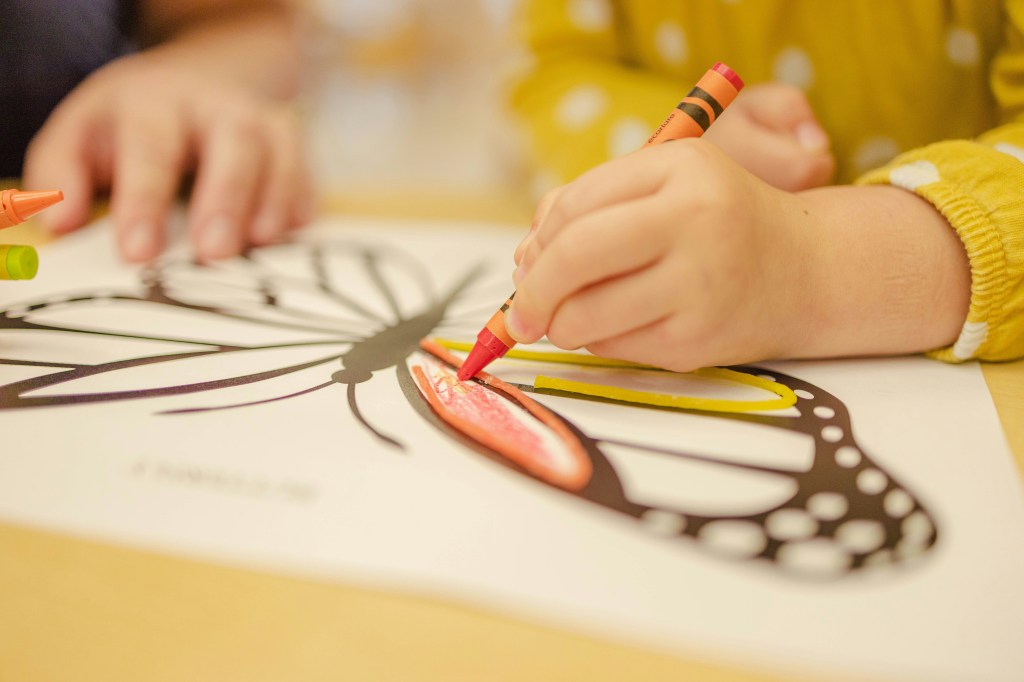
Kindergarten is a major leap in fine motor development. Children at this age are refining their grip, building endurance for writing, and learning to control their hands with greater precision. Strong fine motor skills help kindergarteners feel confident in school tasks like writing letters, cutting shapes, coloring neatly, and using classroom tools.
This stage is all about refinement, control, and readiness.
What Fine Motor Skills Look Like in Kindergarteners
[Insert Image: Close‑up of kindergartener holding a pencil correctly]
Kindergarteners typically begin to:
- Hold a pencil with a mature tripod grasp
- Write letters and numbers with control
- Cut out shapes accurately
- Color inside lines
- Build detailed structures
- Use glue with precision
- Manipulate small objects confidently
These skills support academic success and independence.
Why Fine Motor Skills Matter in Kindergarten
Fine motor development helps children:
- Write more clearly and comfortably
- Build stamina for longer tasks
- Improve hand‑eye coordination
- Strengthen problem‑solving skills
- Develop independence in daily routines
Children with strong fine motor skills often feel more confident in early academics.
Fine Motor Activities for Kindergarteners (Ages 5–6)
Below are targeted activities that strengthen hands and support early writing success.
1. Writing & Letter Formation Practice
[Insert Image: Kindergartener tracing letters on lined paper]
Use:
- Lined paper
- Dry‑erase boards
- Letter tracing sheets
- Pencil grips if needed
What it builds: Control, endurance, handwriting readiness
2. Cutting Complex Shapes
[Insert Image: Kindergartener cutting out a star or curved shape]
Provide:
- Stars
- Hearts
- Spirals
- Multi‑step shapes
What it builds: Precision, bilateral coordination, focus
3. Small Manipulative Play
[Insert Image: Kindergartener using small building blocks or snap cubes]
Try:
- Snap cubes
- Small blocks
- Interlocking toys
- Mini puzzles
What it builds: Dexterity, spatial awareness, problem‑solving
4. Playdough Strengthening Work
[Insert Image: Kindergartener pinching or rolling playdough]
Encourage:
- Pinching
- Rolling
- Cutting
- Shaping letters
What it builds: Finger strength, endurance, control
5. Tweezers, Tongs & Small Tools
[Insert Image: Kindergartener using tweezers to pick up small objects]
Use:
- Pom‑poms
- Beads
- Buttons
- Mini erasers
What it builds: Pincer grasp, precision, hand strength
6. Mazes, Dot‑to‑Dots & Tracing Paths
[Insert Image: Kindergartener completing a maze worksheet]
These activities help children:
- Strengthen pencil control
- Improve visual‑motor integration
- Prepare for writing fluency
Tips for Parents & Teachers
- Encourage proper pencil grip
- Provide short, focused practice
- Mix structured tasks with play
- Offer tools that fit small hands
- Celebrate progress and effort
Kindergarteners thrive when fine motor practice feels fun and achievable.
 Kids Learning Activities
Leave a comment